
You can find the Interactive Hall Plan 2025 here.
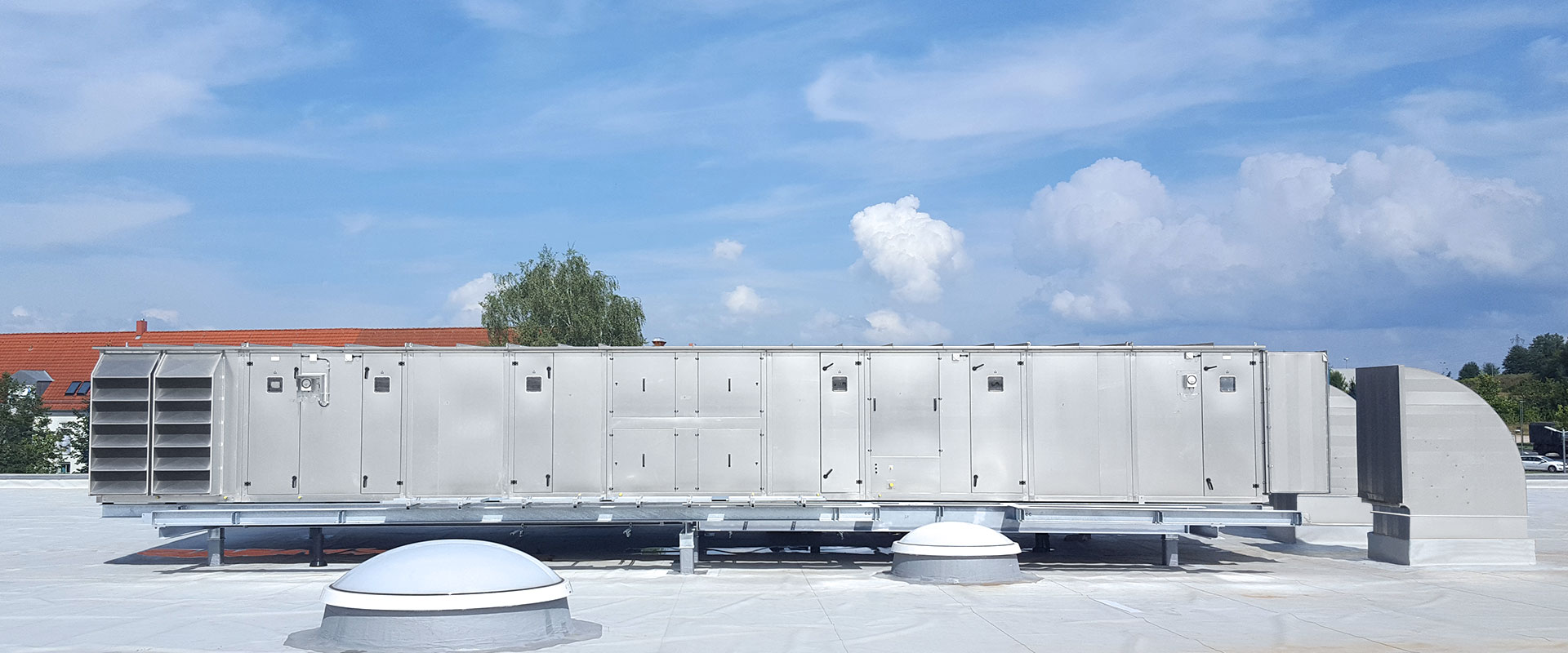
Ventilation and air handling units in frame construction
Ventilation and air handling units in frame construction
Description
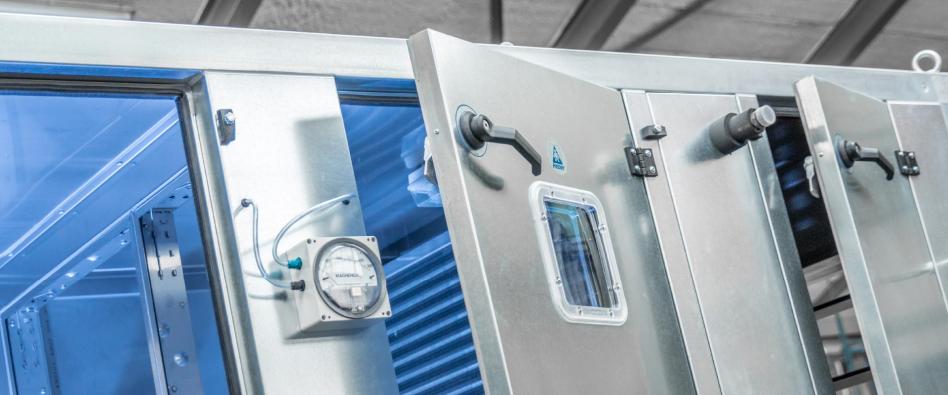
The majority of our development and research efforts focus on the production and optimization of ventilation and air conditioning units with frame construction. At Heber, we have successfully created galvanized and insulated hollow frame profiles connected with aluminum die-cast corners to form exceptionally stable unit sections, which are bolted externally. Double-walled panels (30–60 mm thick) with appropriate mineral wool insulation are flush-fitted into the frames and secured from the inside.
This results in a product that fully adheres to our principle of a "custom-designed air conditioning unit", as soundproofing and thermal insulation values can be tailored to meet specific requirements or customer preferences.
Our primary focus in ventilation and air conditioning units with frame construction is on stability, which directly correlates with the units' durability.
Data & Facts
At ±1,000 Pa, the stability of frame construction units is classified as mechanical strength according to DIN EN 1886. The highest classification (Class D1) permits a maximum deflection of 4.0 mm/m. The TÜV-measured deflection of our units is 0.6 mm/m, and in overpressure and underpressure conditions, it is as low as 0.1 mm/m.
At Heber, we not only meet standards, but we set them.
Frame Units – Technical Specifications and Housing Details
Heber’s frame units are manufactured in various wall thicknesses and in thermally decoupled designs:
- INDOOR RG 30 (Wall thickness: 30 mm)
- INDOOR RG 50 (Wall thickness: 50 mm)
- INDOOR RG 50 TE (Thermally decoupled)