

The global data centre cooling industry is entering its most transformative decade yet. As AI and high-performance computing applications continue to expand rapidly, thermal demand is increasing at an unprecedented pace. Cooling technology, once regarded primarily as supporting infrastructure, is becoming a critical enabler of digital growth.
According to the international market research and consulting company Frost & Sullivan, demand for cooling capacity is expected to grow faster than newly deployed data centre capacity. The main drivers are next-generation chips whose thermal requirements increasingly challenge conventional cooling systems.
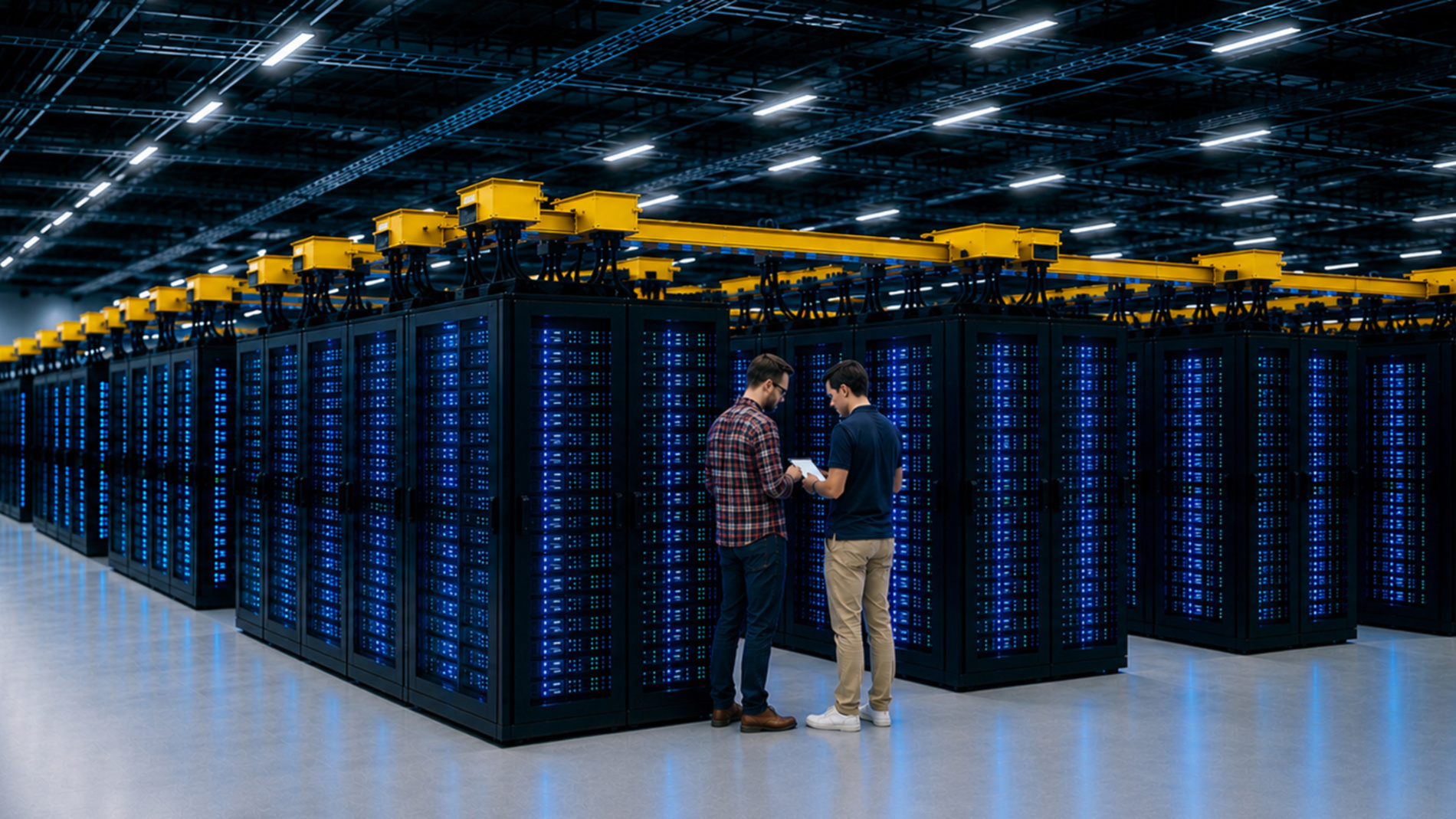
This shift is particularly evident in AI applications and high-performance computing environments. The high-performance processors used in these systems generate significantly more heat than traditional server architectures. Rack densities are already reaching between 800 watts and 1.5 kilowatts per chip. As a result, conventional room-based cooling concepts are approaching their physical limits, particularly in hyperscale data centres. Against this backdrop, liquid-based cooling solutions are evolving from niche technologies into a long-term market trend. These include direct-to-chip systems, which remove heat directly from processors, as well as immersion cooling solutions, where IT equipment is submerged in specialised cooling fluids. Both approaches are gaining traction wherever air-based cooling systems reach their performance limits.
At the same time, close-coupled cooling is emerging as an important transitional solution. It enables targeted thermal management while allowing operators to gradually adapt existing facilities to new requirements. Although room-based CRAC and CRAH systems remain the largest revenue-generating category in the short term, their market share is expected to decline noticeably by 2030 as new cooling architectures gain momentum.
Regional Dynamics Shape the Market
Global developments are increasingly characterised by regional differences. Frost & Sullivan forecasts that the data centre cooling market will grow from USD 10.47 billion in 2024 to USD 52.86 billion by 2034, representing a compound annual growth rate of 17.6 percent.
North America remains at the forefront of liquid-cooling adoption. The expansion of powerful AI clusters built around graphics processing units (GPUs), combined with extensive data centre modernisation projects, continues to drive demand. At the same time, the region is becoming an international testing ground for immersion cooling and innovative heat reuse concepts.
Europe is moving particularly quickly towards sustainability-driven cooling strategies. Regulatory requirements relating to energy efficiency, refrigerants and water consumption are accelerating the adoption of free cooling, heat reuse and alternative cooling technologies. In the Asia-Pacific region, hyperscale investments in countries such as Singapore, India, Japan and Australia are driving the highest growth rates. While more advanced markets are adopting liquid cooling at an early stage, emerging markets are initially scaling with highly efficient air-based systems before transitioning to liquid-based solutions.
Germany also plays a key role in this environment. Home to DE-CIX, one of the world's leading internet exchange points, Frankfurt am Main has established itself as one of Europe’s foremost data centre hubs. The continued expansion of data centre capacity across the region highlights the growing importance of high-performance, energy-efficient cooling technologies.
Several structural trends are shaping the next phase of market development. Demand is growing for integrated cooling platforms that combine control systems, workload telemetry, cooling distribution units (CDUs), pumps and chillers into holistic solutions. Operators of large-scale data centres increasingly require intelligent thermal orchestration rather than standalone hardware components. At the same time, modular and prefabricated cooling systems are gaining importance. Time pressures, space constraints and infrastructure limitations are driving demand for solutions that can be deployed quickly and expanded flexibly.
Sustainability is also becoming a major innovation driver. Water scarcity, increasing decarbonisation requirements and ESG-driven investment decisions are accelerating the adoption of energy-efficient cooling concepts. Heat reuse, free cooling and refrigerant-free systems continue to gain momentum. At the same time, new market opportunities are emerging through increasing industry specialisation. Semiconductor manufacturing, scientific computing, financial services and security-critical applications require highly specialised liquid-cooling solutions that are integrated directly into their respective system architectures.
Cooling has therefore become a central element of digital infrastructure strategy. As AI redefines thermal requirements and sustainability targets create additional innovation incentives, organisations that invest early in integrated platforms, modular concepts and liquid-ready architectures will gain significant competitive advantages. They are set to shape the performance and future viability of data centres throughout the coming decade.
ISH 2027: Solutions for the Next Generation of Data Centres
The transformation of the data centre industry demonstrates how closely digital infrastructure is becoming intertwined with modern building and energy technologies. As a result, topics such as energy efficiency, cooling, heat reuse and intelligent control systems are gaining increasing importance. ISH addresses these developments by providing a platform for dialogue, innovation and practical solutions. Taking place in Frankfurt am Main from 15 to 19 March 2027, the world’s leading trade fair for water, heating and air brings together innovative solutions for sustainable and digital building technology.
For data centre operators, planners, engineers and technical decision-makers, the solution fields “Indoor Air”, “Water-Bearing Systems”, “Heat Generation” and “Intelligent Building Control” are of particular relevance. They showcase solutions for energy-efficient cooling, liquid cooling, heat reuse, energy management and the digital networking of technical infrastructures.
Further information about ISH 2027 is available at: www.ish.messefrankfurt.com
Discover the full expert article, “AI, Liquid Cooling and the New Reality of Data Centres”, as well as a wealth of additional insights and industry expertise, 24/7 on Building. Technology. Solutions. – your single destination for the latest trends. Explore fresh ideas and inspiration from the world of intelligent building technology.
ISH
The next ISH, the world’s leading trade fair for HVAC and water, will take place from 15 to 19 March 2027 in Frankfurt am Main. www.ish.messefrankfurt.com
Information and photographs for the press:
www.ish.messefrankfurt.com/press
Social media:
www.ish.messefrankfurt.com/facebook
www.ish.messefrankfurt.com/youtube
www.ish.messefrankfurt.com/linkedin
www.ish.messefrankfurt.com/instagram
Building. Technolgoy. Solutions. Linkedin

Background information on Messe Frankfurt
Sustainability at Messe Frankfurt